Valid IDs for NBI Clearance: Complete 2026 Guide
Getting your NBI Clearance in the Philippines is straightforward but only if you show up with the right identification. Many applicants face unnecessary delays or rejections simply because they brought the wrong type of ID. This guide covers everything you need to know about valid IDs for NBI Clearance in 2026, including primary and secondary IDs, special categories, common mistakes to avoid, and answers to the most frequently asked questions.
Why Your ID Matters for NBI Clearance
The NBI Clearance is an official government document certifying that a person has no criminal record. Before the NBI can issue this document, they must verify who you are. This is where your ID comes in.
The National Bureau of Investigation requires government-issued identification to confirm your true identity and ensure that no one is applying under a false name. If your ID is expired, damaged, photocopied, your application can be delayed or rejected. That’s why knowing which IDs are valid before your appointment is essential.
Primary Valid IDs for NBI Clearance
If you have any one of the following primary IDs, you are good to go. These are the most commonly accepted government-issued identification documents at NBI offices across the Philippines.
Secondary Valid IDs for NBI Clearance
If you do not have any of the primary IDs listed above, you may present two (2) secondary IDs instead. These are supplementary forms of identification that the NBI accepts in combination.
Important: When using secondary IDs, you need to present two of them together. Make sure the details on both IDs are consistent and match the information you provided in your online application form.
IDs That Are NOT Accepted
Some applicants mistakenly bring IDs that the NBI does not accept. To avoid wasting your appointment slot, be aware of the following:
How to Prepare Your Valid IDs for NBI Clearance Before your Appointment
A little preparation goes a long way. Here is what you should do before heading to the NBI office:
Check the Expiry Date: Even if your ID looks fine, confirm the expiry date. An expired ID will be rejected on the spot.
Match your Information: The name, date of birth, and address on your ID must match what you entered during online registration. Even small discrepancies (like a missing middle name or a maiden name vs. married name) can cause problems. If there is a mismatch, bring a supporting document like a PSA Birth Certificate, Marriage Certificate, or Affidavit of Discrepancy.
Bring the Original: NBI does not accept photocopies or digital screenshots. The physical, original card must be presented during your appointment.
Bring a Backup ID: Even if one valid primary ID is sufficient, always carry a second ID just in case. This prevents last-minute complications.
Tip: Keep your IDs in Good Condition Laminated, scratched, or water-damaged IDs with illegible text may be rejected. If your ID is in poor condition, consider applying for a replacement before your NBI appointment.
Special Categories and Their ID Requirements
The NBI has specific provisions for certain groups of applicants.
First-Time Job Seekers
Under Republic Act No. 11261, first-time job seekers are exempt from paying the NBI Clearance fee. To qualify, they must present a Barangay Certificate confirming that they are a resident of at least six months and are seeking employment for the first time. A valid ID is still required for identity verification.
Foreign Nationals
Foreign applicants must bring their original passport and their Alien Certificate of Registration (ACR I-Card). Applications by foreign nationals are processed at the main NBI office, and clearance may take 10 to 15 working days due to additional background verification.
Minors (Under 18 Years Old)
Minors can apply for NBI Clearance but must be accompanied by a parent or legal guardian. Required documents include the minor’s PSA Birth Certificate, a school ID (if available), and the valid ID of the accompanying parent or guardian.
Persons with Disabilities (PWDs) and Senior Citizens
These applicants are given priority lanes at NBI offices. Their respective PWD ID and Senior Citizen ID are accepted as primary identification.
The Online Application Process and When Your ID Is Used
The NBI has modernized its clearance system into a largely digital process. Here is how it works step by step:
- Register an account at the official NBI Clearance portal (clearance.nbi.gov.ph).
- Fill in your personal information accurately.
- Schedule your NBI Appointment Online at your preferred office.
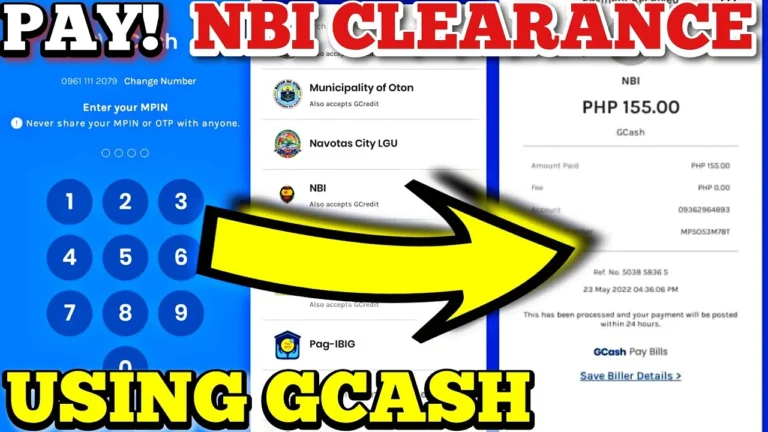
- Pay the processing fee online or through authorized payment partners.
- Receive your appointment confirmation and QR code.
- Appear at the NBI office on your scheduled date.
Your valid IDs for NBI Clearance is not required during the online registration stage. It becomes essential on appointment day, when NBI personnel verify your identity in person before collecting your biometrics.
Biometric Collection and Security Features
During your physical appearance, NBI staff will collect the following biometric data:
Once processed, your NBI Clearance certificate will include several built-in security features to prevent fraud and forgery, including a QR code, holograms, UV-reactive ink, watermark seals, microprint technology, and a unique serial number. The document can be verified online through the NBI’s digital verification portal.
What Happens If There Is a “Name Hit”?
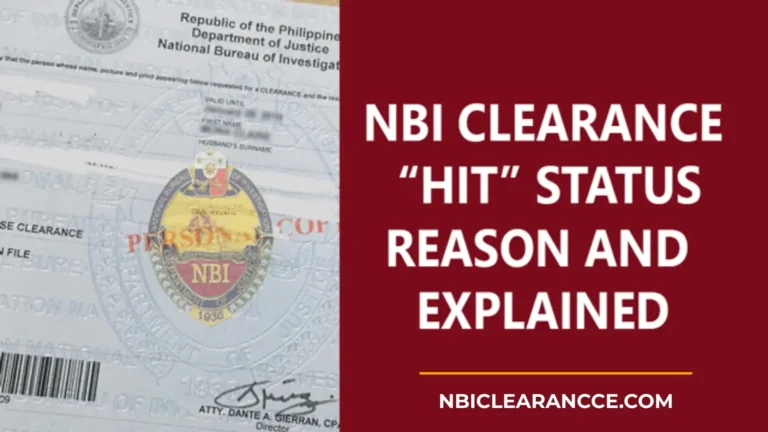
A “name hit” occurs when the NBI system finds a record that matches or closely resembles your name in its database. This does not automatically mean you have a criminal record. It may simply be a case of a common name shared by many individuals.
If you get a hit, your clearance will not be released on the same day. Instead, you will go through an additional verification process, which may include:
The process typically takes a few additional working days, so plan accordingly if you need your clearance urgently. You can also read our helpful guide on NBI HIT, where we also share how to quickly resolve this issue.
Emergency Processing
If you urgently need your NBI Clearance for a job offer, a visa application, or a legal proceeding, you may request priority processing. You will need to provide proof of urgency, such as a job offer letter, travel document, or court summons. The NBI reviews these requests on a case-by-case basis.
Common Mistakes to Avoid while selecting Valid IDs for NBI Clearance
Here are the most frequent ID-related mistakes applicants make:
Avoiding these mistakes will save you from rescheduling, repaying fees, and wasting valuable time.
Final Checklist Before Your Appointment
Before heading to the NBI office, run through this quick checklist:
Conclusion
Your NBI Clearance is one of the most important documents you will need for employment, travel, and legal transactions in the Philippines. Making sure you have the right Valid IDs for NBI Clearance before your appointment is the single most important step to ensure a smooth, hassle-free experience.
Whether you are a first-time applicant, a student, a senior citizen, an OFW, or a foreign national, this guide covers every scenario. Review the accepted IDs, prepare your documents in advance, and arrive at your appointment ready. For the most current updates, always check the official NBI website at clearance.nbi.gov.ph before your appointment, as requirements may be updated periodically.